Neoplastic process with bilateral hip dysplasia in a dog.

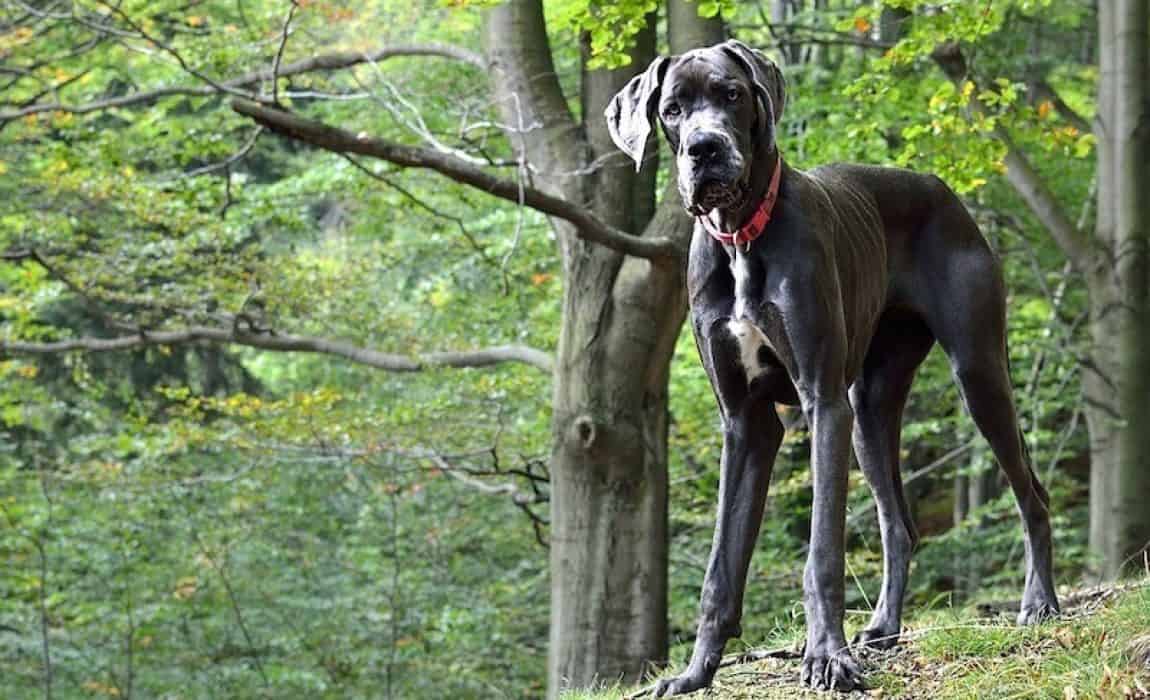
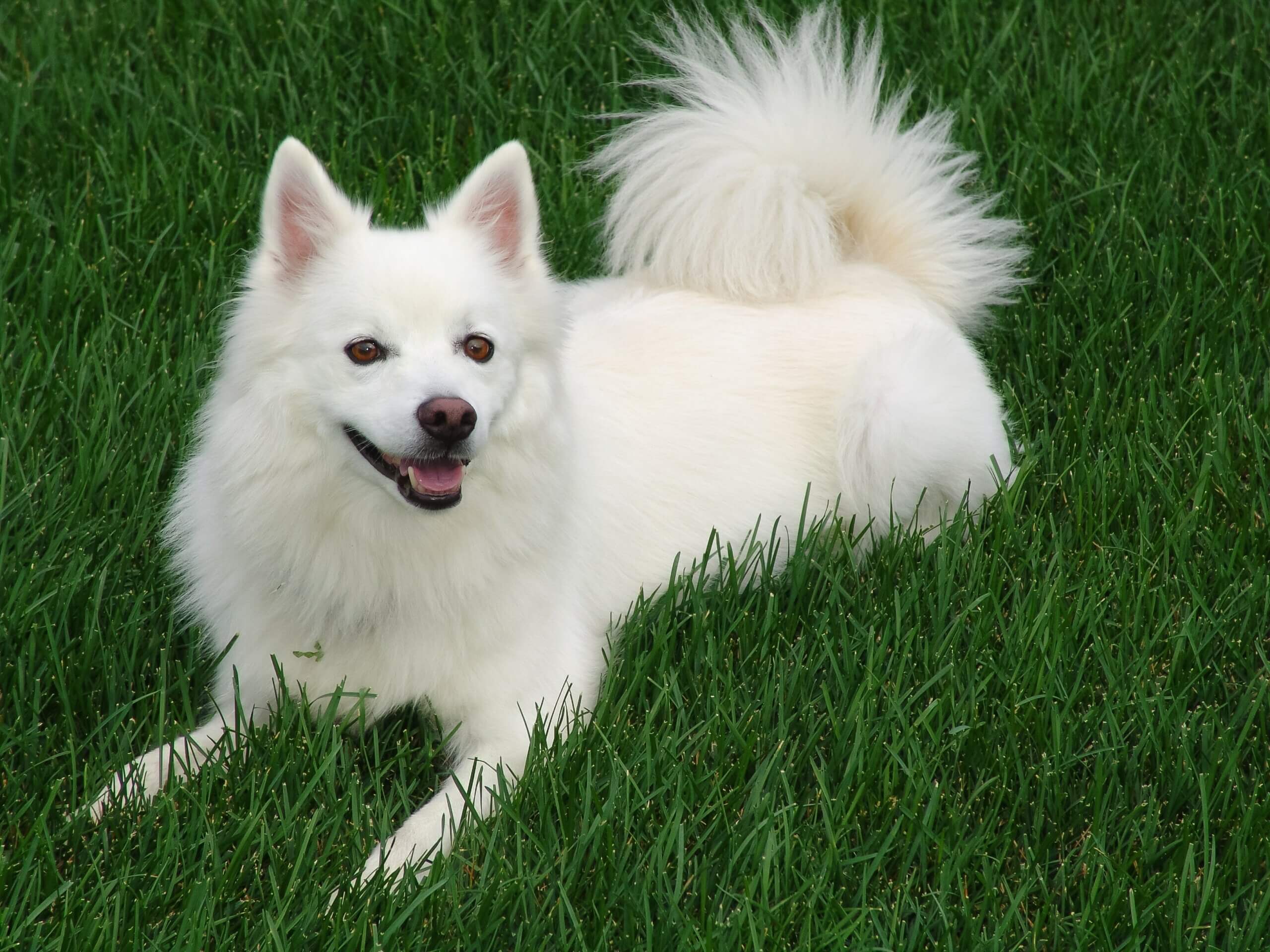
Japanese Spitz

10-years-old, Japanese Spitz. Presented with lameness after another dog ran into him. Radiographs revealed dysplastic hips and a treatment was established. No improvements and slight deterioration were seen after treatment. A CT-scan of the thoracolumbar spine was performed.

Japanese Spitz

Description

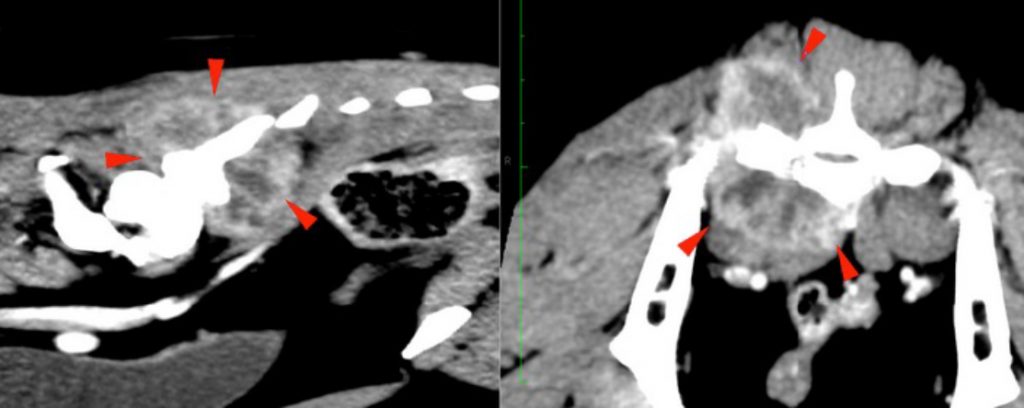
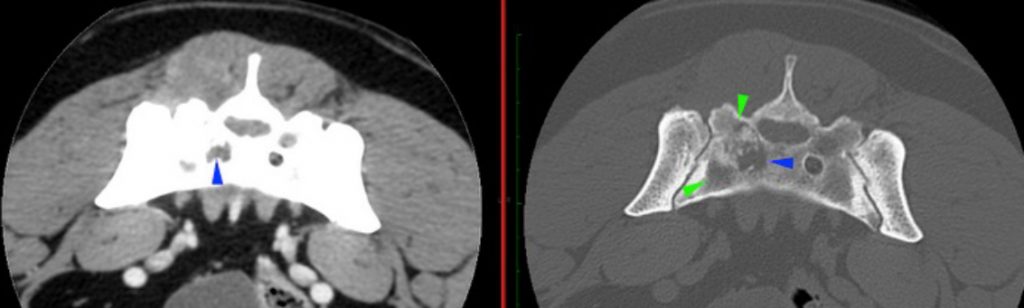
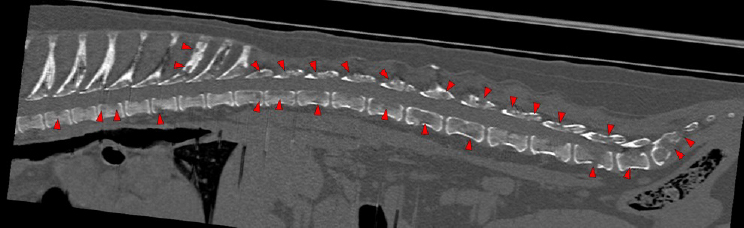
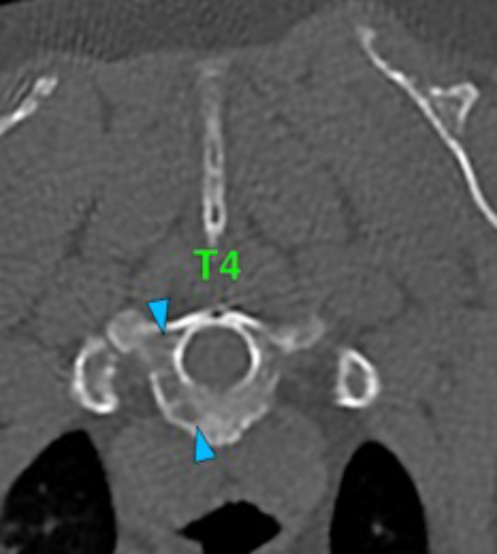
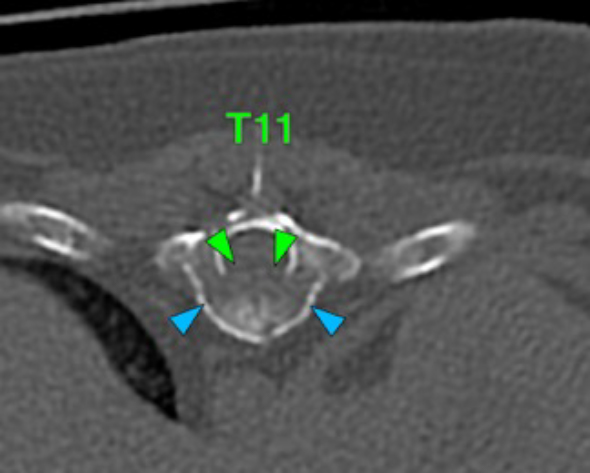
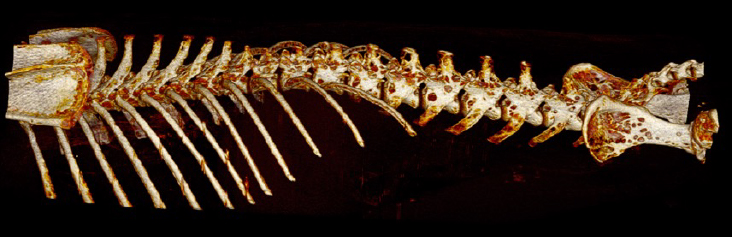
There are multiple osteolytic lesions affecting almost all the vertebral bodies (red arrows). Some of them are areas of permeative or moth-eaten lysis, while others converge into geographic lesions. They affect all the different portions of the vertebra (vertebral body, spinous and transverse processes, etc.) and involve the medullary cavity of the bone (blue arrows), and some of them cause lysis of the cortex (green arrows). Lumbar vertebral bodies more severely affected.

Dog, thoracolumbar spine, vertebral bodies
Dog, thoracolumbar spine, vertebra

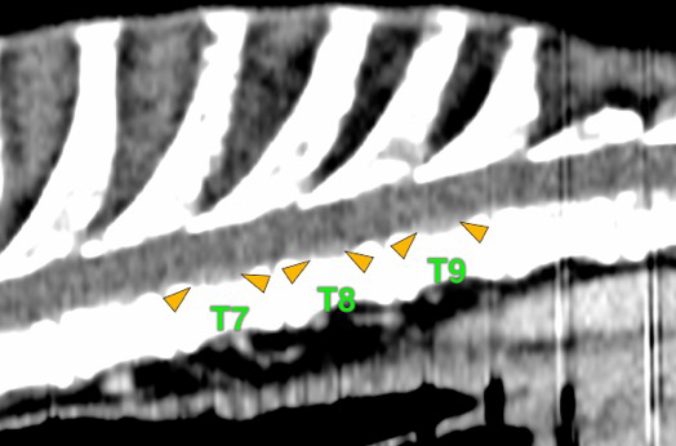
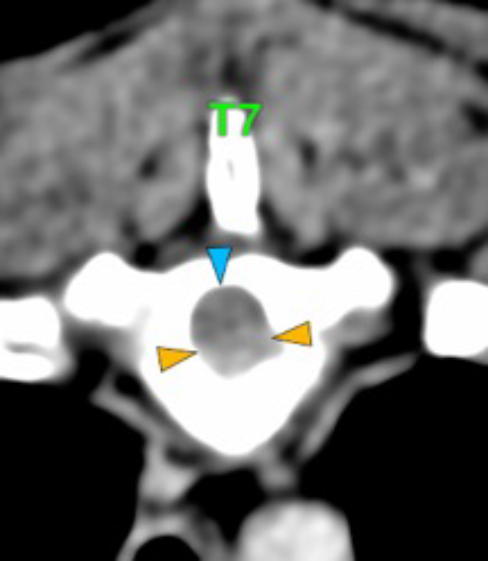
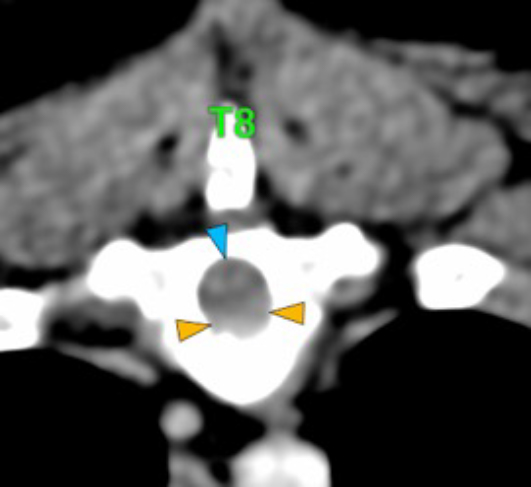
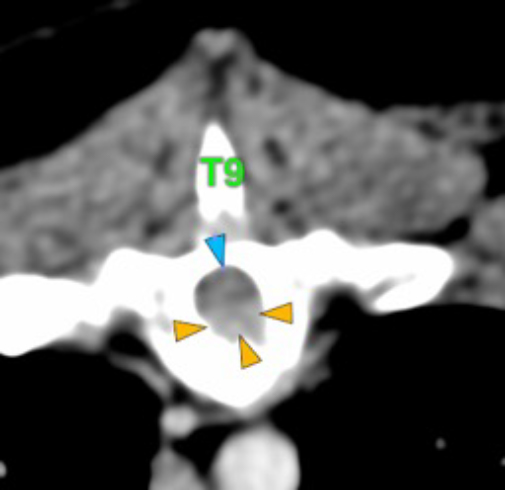
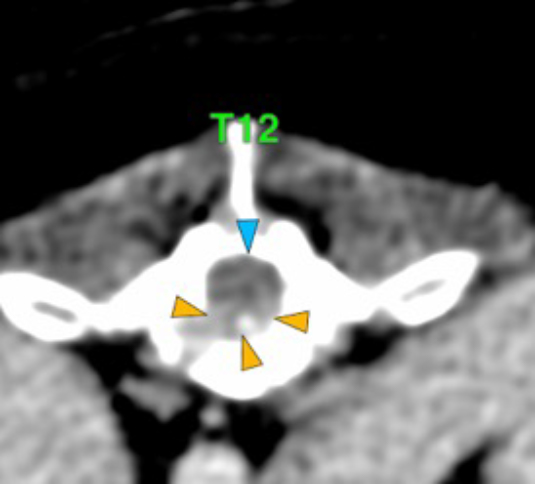
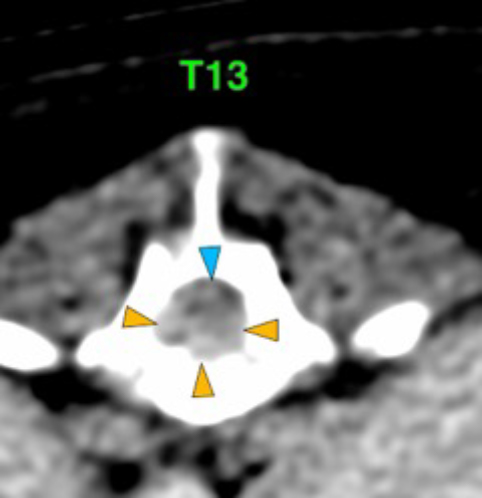
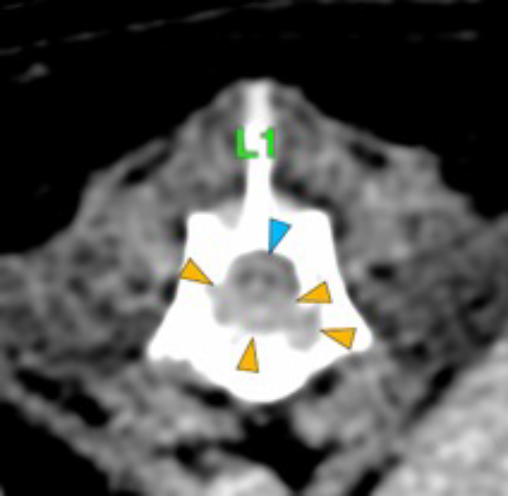
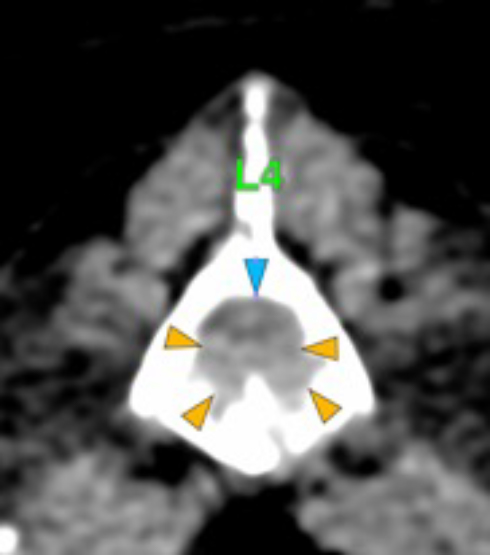
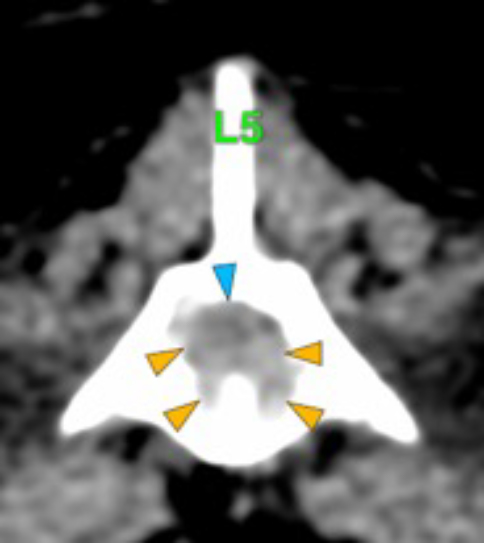
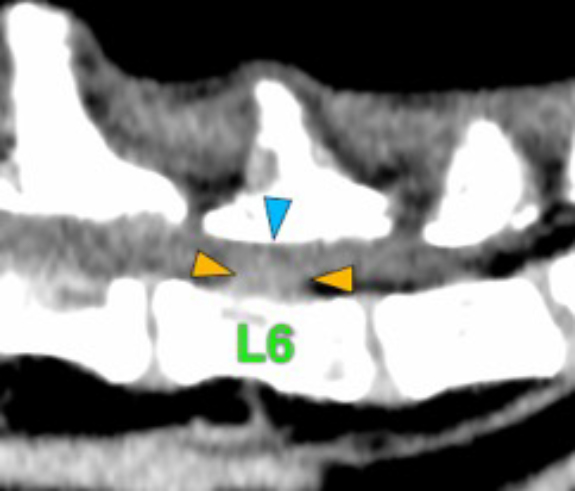
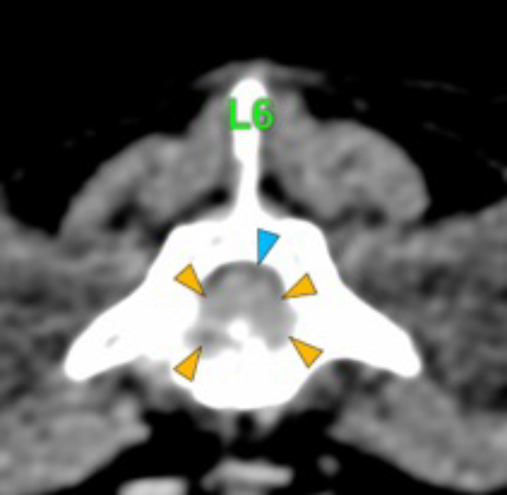
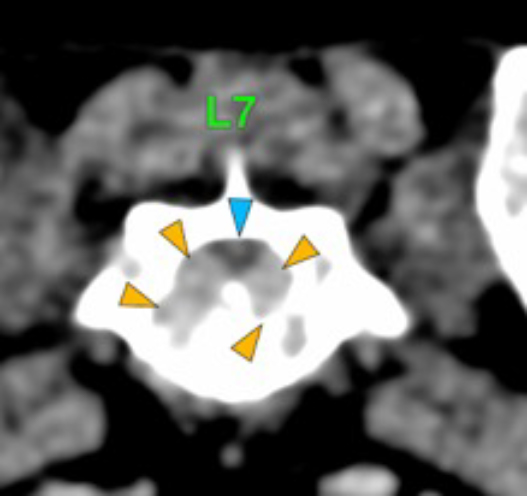
The osteolytic lesions have soft tissue attenuation that shows moderate and slightly heterogeneous post-contrast enhancement. In some of the vertebrae, the lesions cause lysis of the cortex and extend into the vertebral canal (orange arrows) causing variable degree of compression of the spinal cord and cauda equina (blue arrows). At the level of the vertebral bodies of T7, T8, T9 and T12 the lesions extend into the ventral and central aspect of the vertebral canal causing a mild compression of the spinal cord. At the level of T13, L1, L4 and L5 the lesions extend into the ventral and central aspect of the vertebral canal, causing moderate compression of the spinal cord. At the vertebral body of L6 the lesion extends into the ventral and central aspect of the vertebral canal, at the mid-aspect of L6, occupying approx. 90% of the diameter of the vertebral canal causing a severe compression of the cauda equina. At the level of L7, the lesion extends into the ventral and both lateral aspects of the vertebral canal, causing severe compression of the cauda equina.

Dog, thoracolumbar spine, vertebra

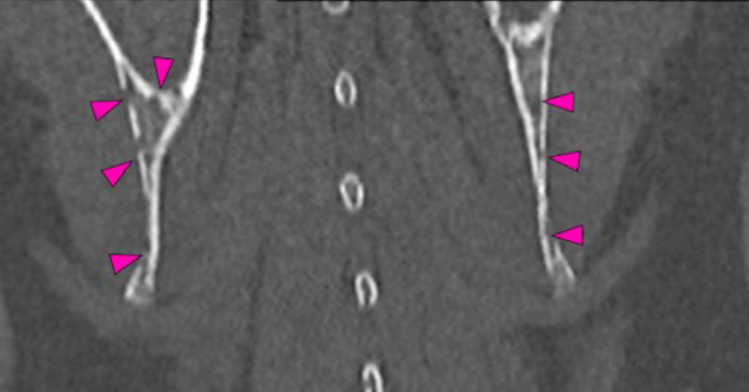
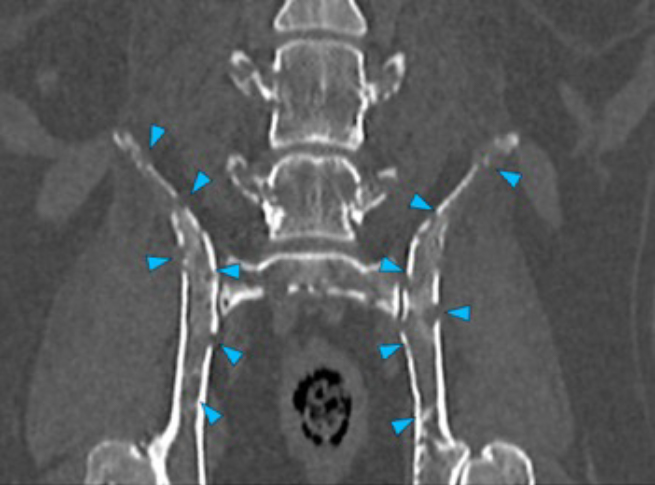
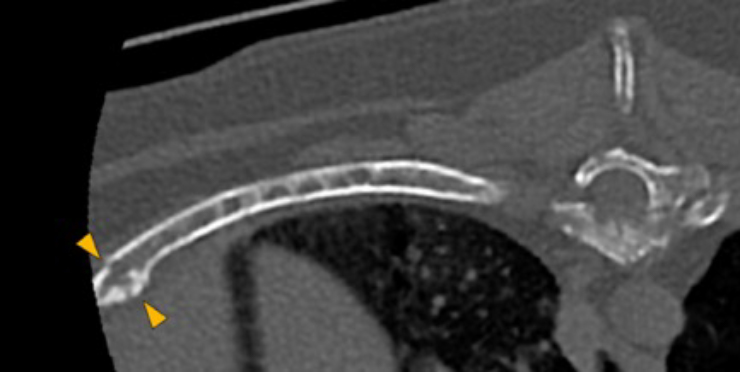
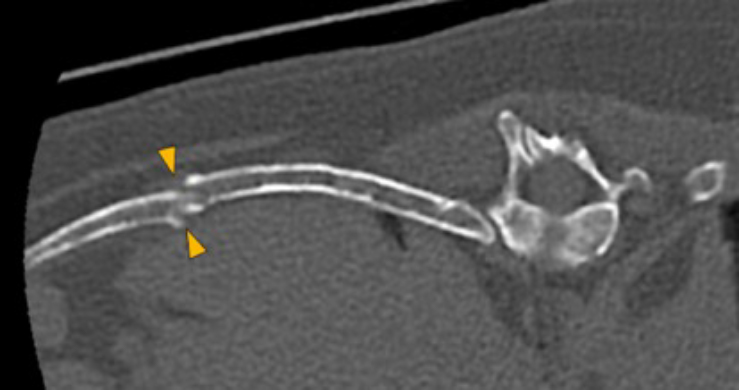
There are multiple osteolytic lesions with the same characteristics affecting both scapula and the pelvic bones included (pink and blue arrows respectively). There are osteolytic lesions with the same characteristics affecting multiple ribs. Associated with these lesions, there are multiple rib fractures.

Dog, thoracolumbar spine, scapula, pelvic bones
Dog, thoracolumbar spine, ribs

10th and 12th rib

Dog, thoracolumbar spine, ribs

3D image showing the osteolytic lesions described in the skeletal structures included

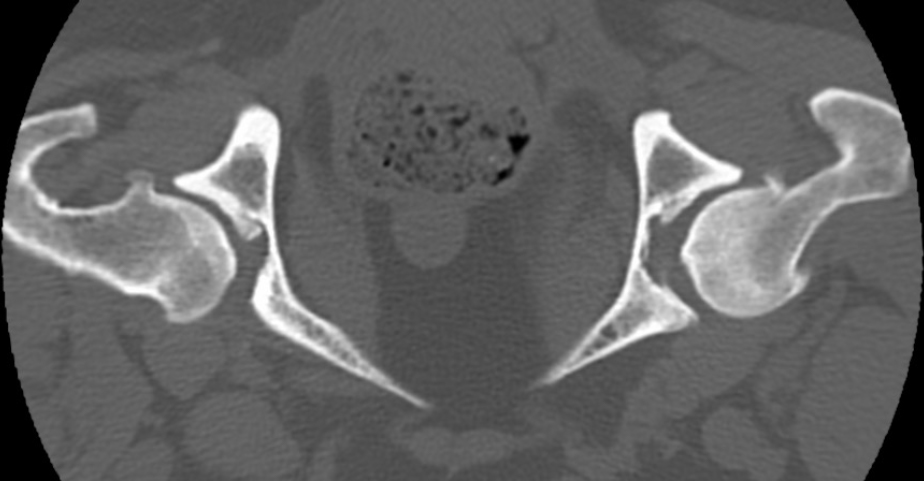
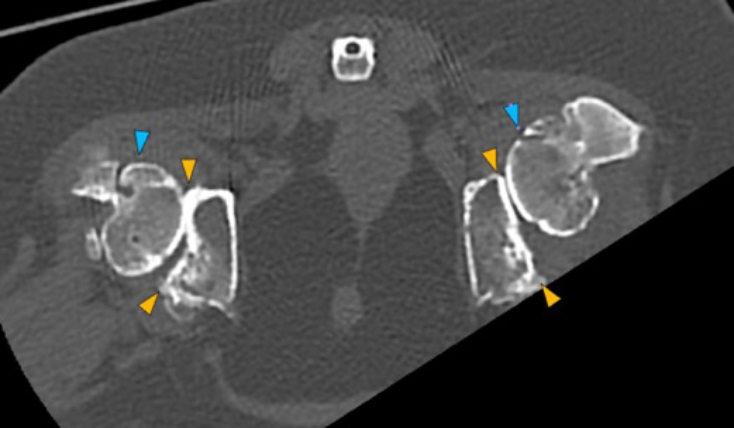
In both coxofemoral joints partially included, there is severe flattening of both acetabula (orange arrows), with marked incongruity of the joint, with dorsal displacement (subluxation) of both femoral heads (blue arrows). In addition, there is severe periarticular new bone formation affecting both acetabula, femoral heads and necks.

Dog, thoracolumbar spine, coxofemoral joints

Diagnosis

  • Polyostotic aggressive osseous lesions affecting all the vertebral bodies included, ribs, scapulae and pelvic bones associated with soft tissue lesions showing a moderate and slightly heterogeneous post-contrast enhancement. These changes are most likely consistent with a neoplastic process (multiple myeloma, most likely vs lymphoma or metastasis, less likely). Associated with these lesions, there is:
    • Soft tissue lesion that extends into the vertebral canal as an extradural lesion in multiple vertebral bodies causing variable degree of compression of the spinal cord and cauda equina (T7-T9 and T12 mild compression of the spinal cord; T13-L1 and L4-L5 moderate compression of the spinal cord; L6 and L7 severe compression of the cauda equina).
    • Multiple rib fractures.
  • Changes in both coxofemoral joints consistent with severe degenerative coxofemoral joint disease associated with bilateral hip dysplasia.

Intestinal perforation with associated peritonitis in a dog

2 year old miniature dachshund

2-years-old, Miniature Dachshund. Presented with vomiting and diarrhea, having lost a significant amount of weight. An abdominal CT-scan was performed.

2 year old miniature dachshund

Description

All the peritoneal fat is mildly diffusely increased in attenuation throughout the entire abdomen (orange arrows). There is a very mild amount of fluid attenuating non-contrast enhancing material spreading between the small intestine (blue arrows).

dog, CT, abdomen, intestine

At the most distal aspect of the descending duodenum/beginning of the jejunum (located at the level of the left mid-abdomen), there is a focal area of complete disruption of the intestinal wall, with a small hypoattenuating defect (orange arrows). This region connects with a fistulous tubular tract that extends along the peritoneum connecting the intestinal loop with the abdominal wall at the level of the left mid/caudal abdomen (red arrows) and connecting with a cavitated lesion that extends along the left abdominal wall and subcutaneous tissues (green arrows).

dog, CT, abdomen, duodenum and jejunum

Saggital and transverse planes

The fistulous tract shows a thin soft tissue wall with homogeneous post-contrast enhancement, and it contains fluid attenuating, non-contrast enhancing material and gas. In addition, the fistulous tract seems to extend cranially located between the abdominal wall and the splenic tail finishing at the level of the cranial/mid-abdomen, immediately caudal to the last rib (blue arrows). In the left abdominal wall, there is a moderate diffuse thickening of the muscles of the wall. Between the muscles of the abdominal wall and extending into the subcutaneous tissue, extending from the region immediately caudal to the last rib up to the inguinal region, there is a cavitated lesion with irregular and ill-defined margins, containing fluid attenuating, non-contrast enhancing material and gas (green arrows). There is an area of disruption of the abdominal muscles connecting with the subcutaneous tissue within this lesion (pink arrows). There is no evident foreign material visible within the affected intestinal loop, fistulous tract or cavitated lesion in the abdominal wall/subcutaneous tissues.

dog, CT, abdomen, spleen

Dorsal, sagittal and transverse planes

dog, CT, abdomen, spleen

Dorsal planes

Diagnosis

  • Changes at the most distal aspect of the descending duodenum/proximal jejunum, consistent with intestinal perforation with complete disruption of the intestinal wall, connecting with a fistulous tract that extends along the peritoneal cavity, connecting with the left abdominal wall. The intestinal perforation could be caused by a penetrating and migrating foreign material considering the history, even if the foreign material is not clearly visible on the CT vs penetrating wound caused by the foreign material.
  • The fistulous tract has a path that goes into the left abdominal wall and another branch, extending cranially between the abdominal wall and the spleen, finishing caudal to the last rib. Adherences with the spleen cannot be ruled out based on the CT.
  • Cavitated lesion affecting the left abdominal wall and adjacent subcutaneous tissues, extending from the caudal aspect of the last rib up to the left inguinal region, consistent with an abscess, containing gas and fluid. There is no evident foreign material, although this cannot be completely ruled out based on the CT.

Chronic hepatitis with hepatic cirrhosis and portal hypertension in a dog

7-year-old mixed dog

7-years-old, mixed dog. Presented with vomiting, weight loss and decreased appetite. An abdominal CT-scan was performed.

7-year-old mixed dog

Description

The liver is severely reduced in size, with markedly rounded margins, especially on the left side. The left medial and lateral liver lobes are severely reduced in size, with rounded margins, and homogeneous pre- and post-contrast attenuation (orange arrows). The remaining liver lobes are also decreased in size, although less severely, with a nodular appearance, showing slightly heterogeneous soft tissue attenuation and post-contrast enhancement, with multiple ill-defined hypoattenuating areas (blue arrows).

dog, CT, abdomen, liver lobes

The portal vein, at its extra and intrahepatic portions, and the hepatic veins are surrounded by a hypoattenuating halo/region, which is quite severe in the cranial abdomen and less severe in the remaining portions, consistent with severe perivascular oedema (green arrows). 

dog, CT, abdomen, portal vein
dog, CT, abdomen, hepatic and renal vessels

Adjacent to the hepatic vessels, in the left cranial abdomen, there is a small network of tortuous vessels, without being able to follow its path, consistent with gastroesophageal varices (purple arrows). In addition, there is a small network of tortuous vessels in the region surrounding the cranial mesenteric artery and renal vessels, medial to the left kidney, consistent with gastrophrenic varices (red arrows).

dog, CT, abdomen, hepatic and renal vessels

The pancreas is slightly prominent with a hypoattenuating halo and multiple hypoattenuating stripes consistent with pancreatic oedema (orange arrows).

dog, CT, abdomen, pancreas

Some of the mesenteric lymph nodes (hepatic, splenic and colic lymph nodes – blue, orange and green arrows respectively) are slightly prominent, decreased in attenuation and with reduced post-contrast enhancement

dog, CT, abdomen, mesenteric lymph nodes

There is a scant amount of peritoneal fluid surrounding the abdominal organs, visible between the intestinal loops (green arrows). In addition, the peritoneal fat has a diffusely and slightly increased attenuation, with presence of fat stranding (blue arrows).

dog, CT, abdomen, intestinal loops

Diagnosis

  • Severely reduced in size liver (left side>right) with nodular appearance, with rounded margins and areas of heterogeneous attenuation. These changes are most likely consistent with hepatic cirrhosis, most likely secondary to chronic hepatitis. Associated with these changes, there are changes consistent with portal hypertension:
    • Very severe perivascular oedema surrounding the portal vessels and hepatic vein.
    • Pancreatic and mesenteric oedema.
    • Presence of gastrophrenic and gastroesophageal varices, consistent with acquired portal collateral circulation.
    • Scant amount of peritoneal effusion.
  • Mild mesenteric lymphadenopathy, which could be reactive associated with the hepatic abnormalities vs edematous lymph nodes secondary to portal hypertension cannot be excluded.