Neoplastic process with bilateral hip dysplasia in a dog.

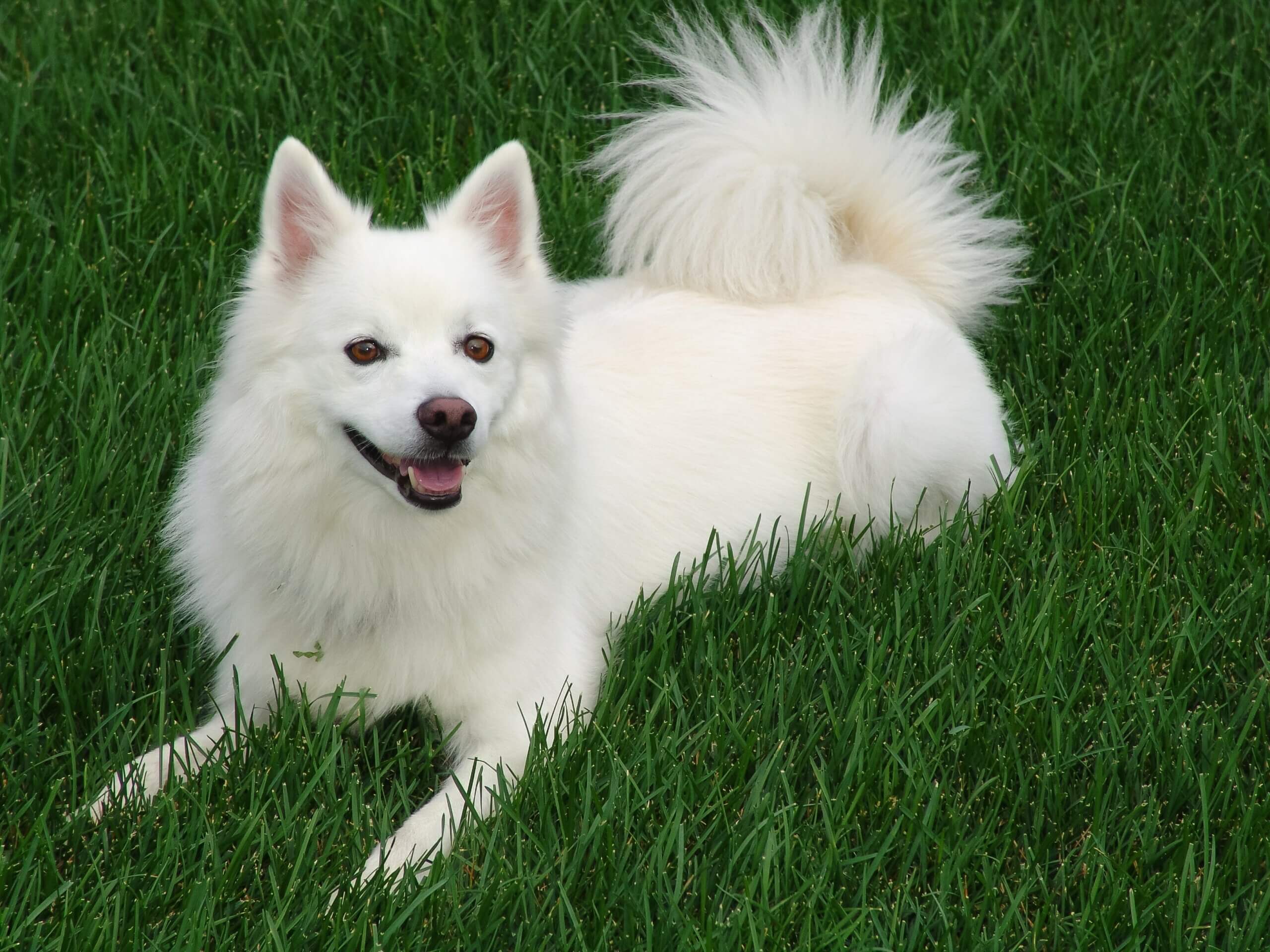
Japanese Spitz

10-years-old, Japanese Spitz. Presented with lameness after another dog ran into him. Radiographs revealed dysplastic hips and a treatment was established. No improvements and slight deterioration were seen after treatment. A CT-scan of the thoracolumbar spine was performed.

Japanese Spitz

Description

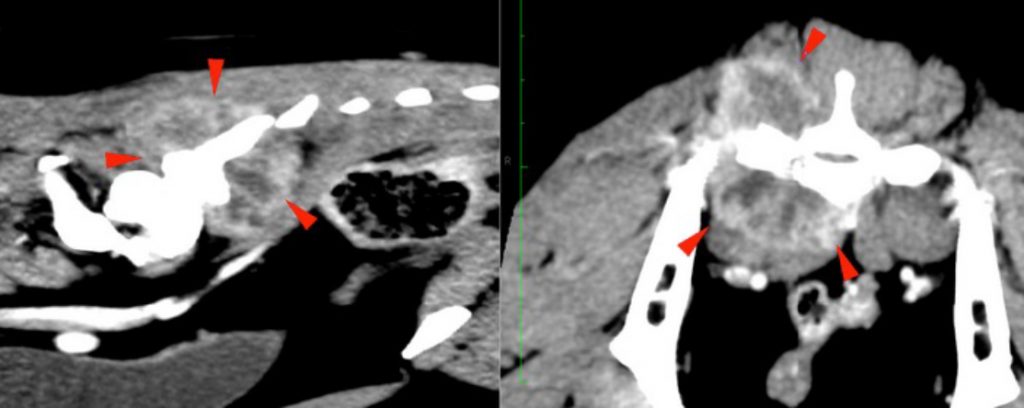
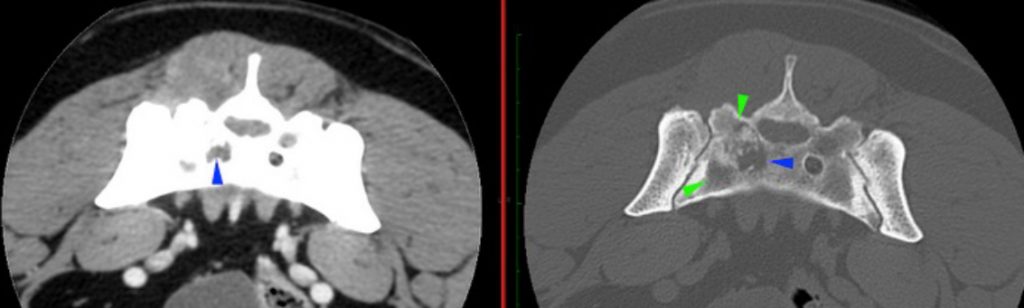
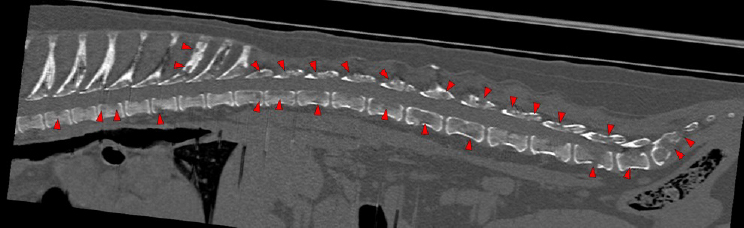
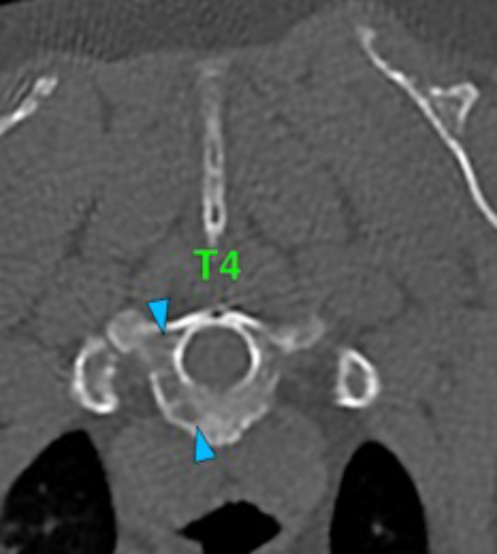
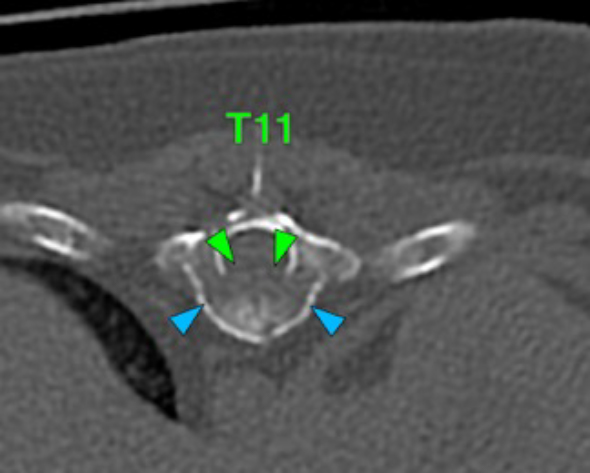
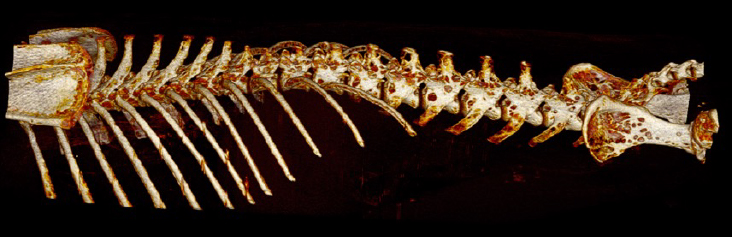
There are multiple osteolytic lesions affecting almost all the vertebral bodies (red arrows). Some of them are areas of permeative or moth-eaten lysis, while others converge into geographic lesions. They affect all the different portions of the vertebra (vertebral body, spinous and transverse processes, etc.) and involve the medullary cavity of the bone (blue arrows), and some of them cause lysis of the cortex (green arrows). Lumbar vertebral bodies more severely affected.

Dog, thoracolumbar spine, vertebral bodies
Dog, thoracolumbar spine, vertebra

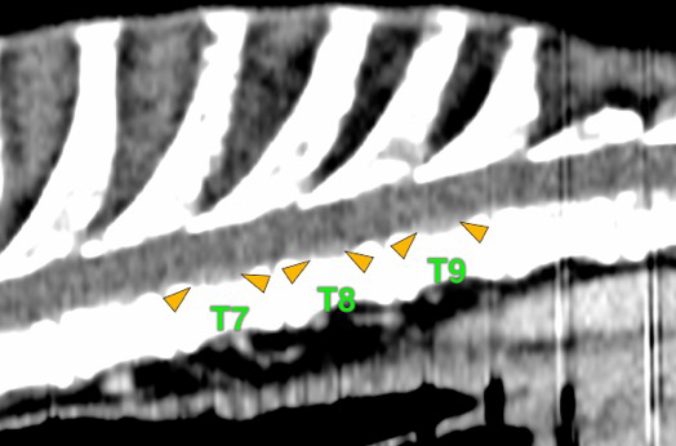
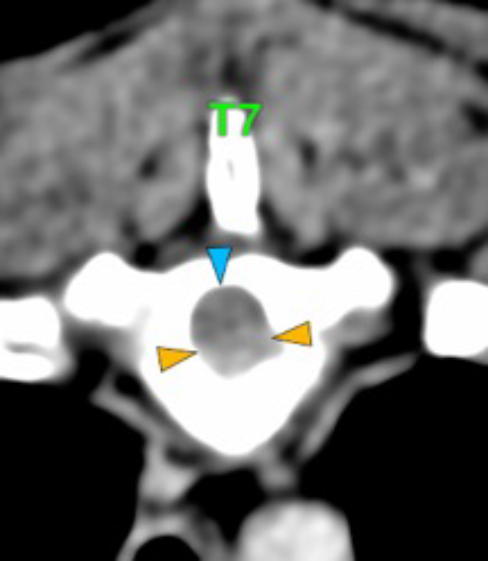
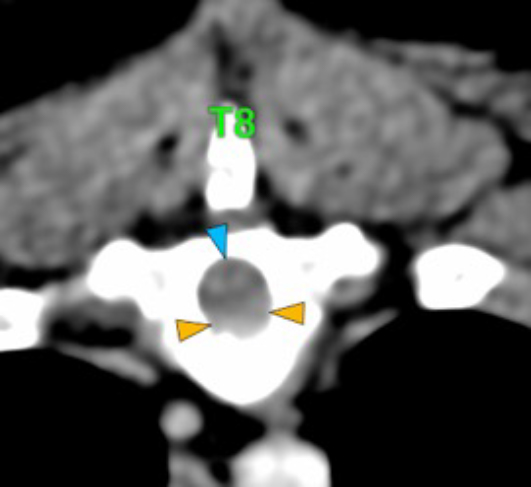
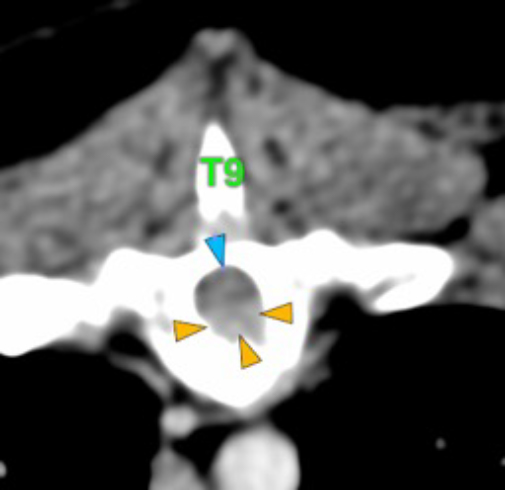
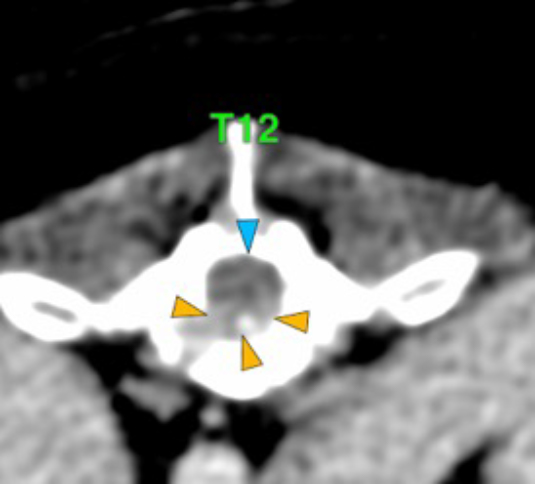
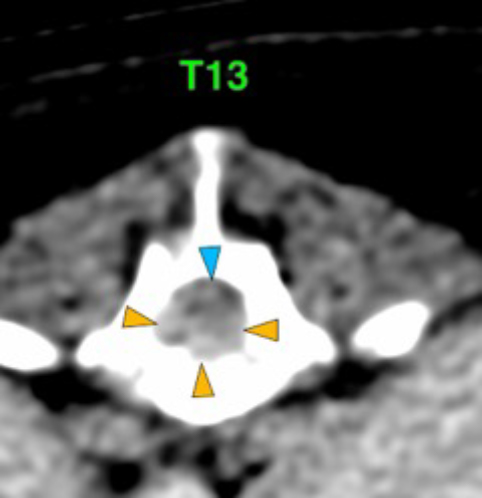
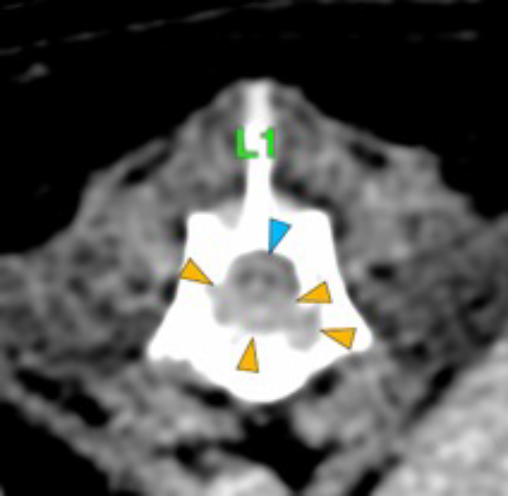
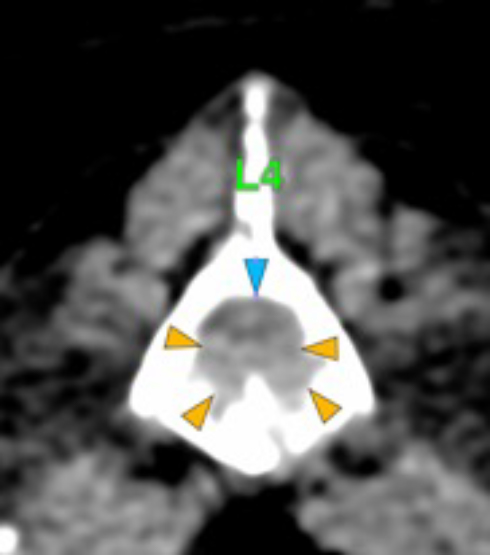
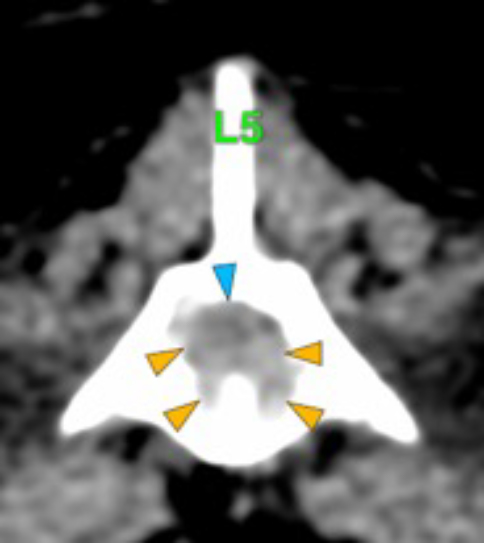
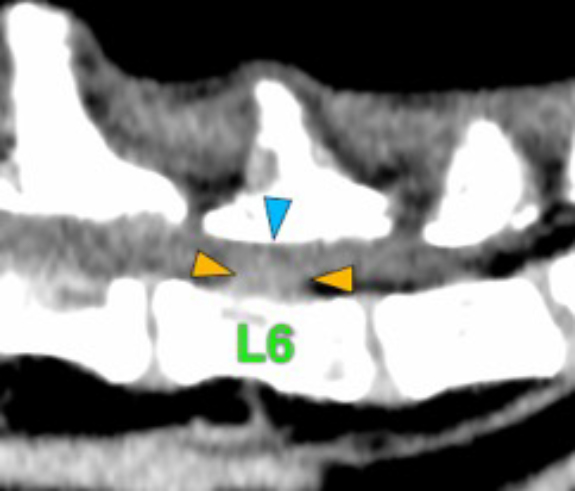
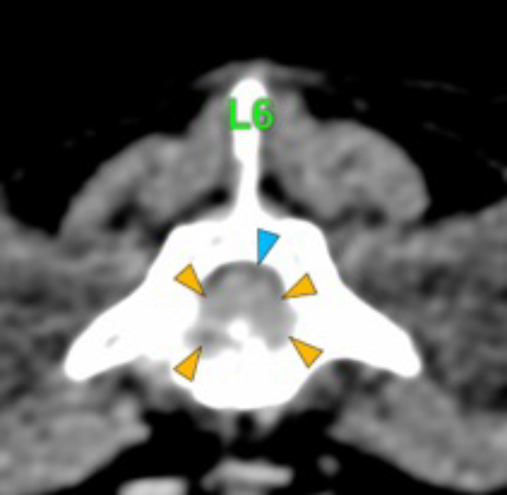
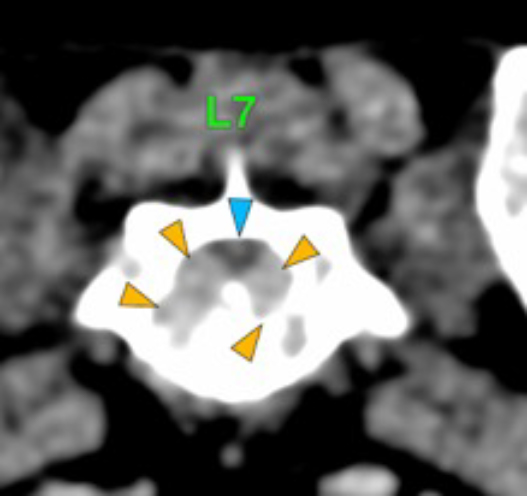
The osteolytic lesions have soft tissue attenuation that shows moderate and slightly heterogeneous post-contrast enhancement. In some of the vertebrae, the lesions cause lysis of the cortex and extend into the vertebral canal (orange arrows) causing variable degree of compression of the spinal cord and cauda equina (blue arrows). At the level of the vertebral bodies of T7, T8, T9 and T12 the lesions extend into the ventral and central aspect of the vertebral canal causing a mild compression of the spinal cord. At the level of T13, L1, L4 and L5 the lesions extend into the ventral and central aspect of the vertebral canal, causing moderate compression of the spinal cord. At the vertebral body of L6 the lesion extends into the ventral and central aspect of the vertebral canal, at the mid-aspect of L6, occupying approx. 90% of the diameter of the vertebral canal causing a severe compression of the cauda equina. At the level of L7, the lesion extends into the ventral and both lateral aspects of the vertebral canal, causing severe compression of the cauda equina.

Dog, thoracolumbar spine, vertebra

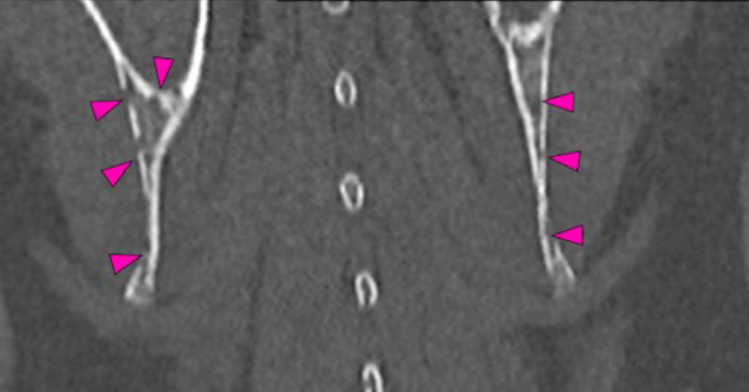
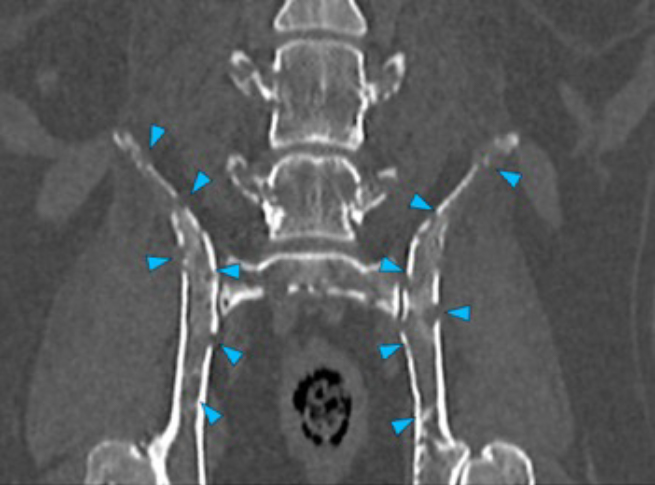
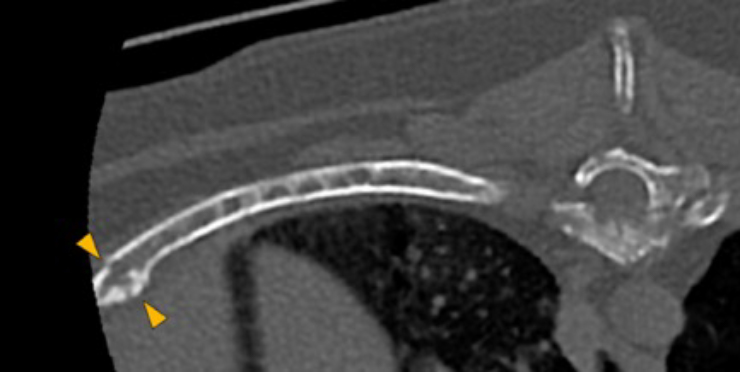
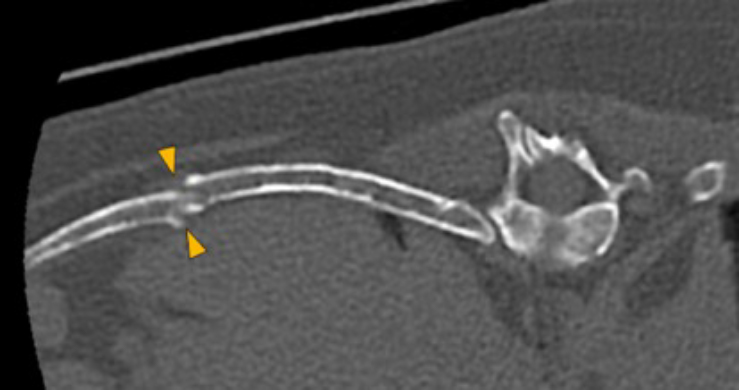
There are multiple osteolytic lesions with the same characteristics affecting both scapula and the pelvic bones included (pink and blue arrows respectively). There are osteolytic lesions with the same characteristics affecting multiple ribs. Associated with these lesions, there are multiple rib fractures.

Dog, thoracolumbar spine, scapula, pelvic bones
Dog, thoracolumbar spine, ribs

10th and 12th rib

Dog, thoracolumbar spine, ribs

3D image showing the osteolytic lesions described in the skeletal structures included

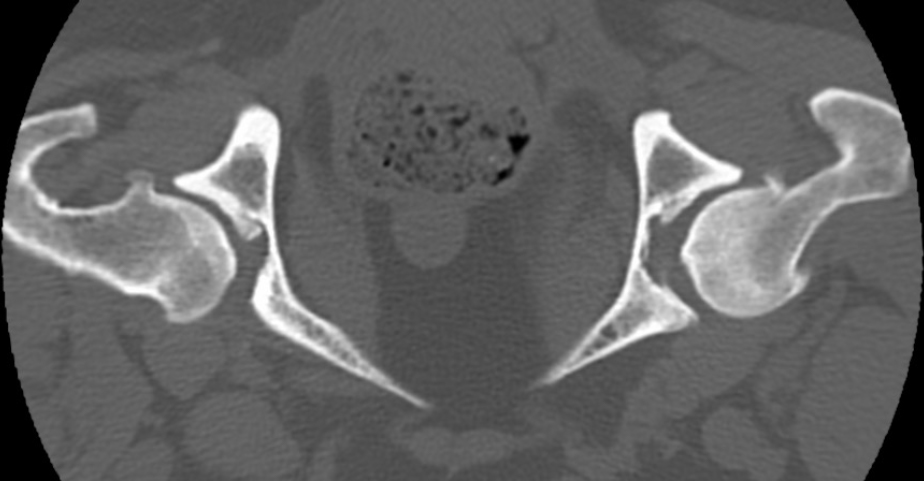
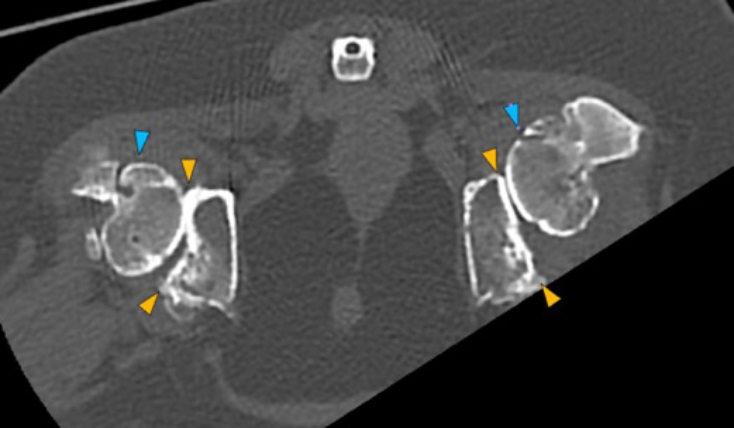
In both coxofemoral joints partially included, there is severe flattening of both acetabula (orange arrows), with marked incongruity of the joint, with dorsal displacement (subluxation) of both femoral heads (blue arrows). In addition, there is severe periarticular new bone formation affecting both acetabula, femoral heads and necks.

Dog, thoracolumbar spine, coxofemoral joints

Diagnosis

  • Polyostotic aggressive osseous lesions affecting all the vertebral bodies included, ribs, scapulae and pelvic bones associated with soft tissue lesions showing a moderate and slightly heterogeneous post-contrast enhancement. These changes are most likely consistent with a neoplastic process (multiple myeloma, most likely vs lymphoma or metastasis, less likely). Associated with these lesions, there is:
    • Soft tissue lesion that extends into the vertebral canal as an extradural lesion in multiple vertebral bodies causing variable degree of compression of the spinal cord and cauda equina (T7-T9 and T12 mild compression of the spinal cord; T13-L1 and L4-L5 moderate compression of the spinal cord; L6 and L7 severe compression of the cauda equina).
    • Multiple rib fractures.
  • Changes in both coxofemoral joints consistent with severe degenerative coxofemoral joint disease associated with bilateral hip dysplasia.

Adrenal and retroperitoneal neoplasia with invasion of multiple vascular structures

Toy Poodle

12-years-old, Toy Poodle dog. Presented with mass palpable in the abdomen. An abdominal and thoracic CT-scan was performed.

Toy Poodle

Description

There is a large, oval, soft tissue mass (red arrows) with markedly irregular and ill-defined margins, located in the caudal aspect of the retroperitoneum, adjacent and ventral to the abdominal aorta and caudal vena cava. The mass has a markedly heterogeneous soft tissue attenuation with strong and heterogeneous post-contrast enhancement. The mass causes a mild dorsal displacement of the aorta (Ao) and its trifurcation (pink arrows). In addition, the mass causes a severe invasion of the caudal vena cava, which is distended with a large filling defect with an intravenous thrombus, showing the same attenuation and post-contrast enhancement as the mass (blue arrows). The mass also invades both common iliac veins, more prominent and extensive on the right compared to the left (orange arrows).

dog, CT, abdomen, retroperitoneum

Adjacent to the mass (red arrows), on the left side, there is another oval mass, showing better defined margins and similar characteristics with strong and heterogeneous contrast enhancement, that could be consistent with a severely enlarged left medial iliac lymph node (green arrows).

dog, CT, abdomen, retroperitoneum

The left kidney is markedly hydronephrotic with a severe distention of the renal pelvis, with preservation of a thin cortex (green arrows). The proximal aspect of the left ureter is also markedly distended, filled with fluid attenuating material up to the level of the mass, where the ureter seems to be embedded within the mass (pink arrows).

dog, CT, abdomen, left kidney

The right adrenal gland is enlarged with well-defined and irregular margins, showing a strong and slightly heterogeneous post-contrast enhancement (orange arrows). The lesion invades the phrenicoabdominal vein, with a filling defect that has the same attenuation as the lesion in the adrenal (blue arrows). It is also in intimate contact with the caudal vena cava causing a mild invasion, with a small and irregular filling defect (purple arrows).

dog, CT, abdomen, right adrenal gland

There are multiple small pulmonary nodules, with soft tissue attenuation, showing mild contrast enhancement, spread throughout the lung lobes (orange arrows).

Alt text: dog, CT, thorax, lung lobes

One of the cranial mediastinal lymph nodes is slightly prominent with homogeneous post-contrast enhancement (orange arrows).

dog, CT, thorax, cranial mediastinal lymph node

Diagnosis

  • Mass with aggressive characteristics affecting the right adrenal gland, most likely consistent with malignant neoplasia (primary adrenal tumor – pheochromocytoma or carcinoma vs metastasis from the mass located in the caudal retroperitoneum). The mass causes invasion of the right phrenicoabdominal vein and mild invasion of the cauda vena cava.
  • Mass located in the caudal retroperitoneum, ventral to the aorta and caudal vena cava, infiltrative and with ill-defined margins, most likely consistent with a neoplastic process (retroperitoneal paraganglioma, most likely).
    • The mass severely invades the caudal vena cava and other adjacent vessels, such as both common iliac veins, both deep circumflex iliac veins, median sacral vein and caudal vesical vein.

    • Moderate left hydroureter and marked left hydronephrosis, most likely secondary to invasion/severe compression of the left ureter by the mass.

  • Severe left medial iliac lymphadenopathy most likely consistent with metastasis.
  • Multiple small pulmonary nodules throughout the lung parenchyma, most likely consistent with metastasis.
  • Mild cranial mediastinal lymphadenopathy, most likely consistent with metastasis vs reactive.

Sublumbar mass

8-years-old female boxer with pelvic limbs weakness and leishmaniosis. In the radiographic study of the lumbar spine, a soft tissue lesion with mineralizations at the ventral aspect of the vertebral bodies of L7-S1 was seen.
An abdominal CT was performed.

Continue reading